

Electro Magnets are fascinating devices that leverage the principles of electromagnetism to create temporary magnetic fields. Unlike permanent magnets, their magnetic strength can be precisely controlled, turned on, or turned off, offering unparalleled flexibility in various applications. From sophisticated industrial machinery to everyday household items, electromagnets play a crucial role in modern technology, enabling a vast array of functions that rely on controlled magnetic forces.
The Fundamental Principle: How Electromagnets Generate Force
At its core, an electromagnet consists of a wire coil, typically wrapped around a ferromagnetic material known as the core. When an electric current passes through this coil, it generates a magnetic field around it. The strength and direction of this magnetic field are directly proportional to the amount of current flowing through the coil and the number of turns in the coil. By controlling the electrical current, engineers can precisely manipulate the magnetic force, making electromagnets incredibly versatile.
Key Components of an Electromagnet:
- Coil: Usually made of copper wire, which is an excellent electrical conductor. The number of turns in the coil significantly impacts the magnetic field strength, as described by Ampere’s Law.
- Core: Often a soft iron or other ferromagnetic material. The core concentrates the magnetic field lines, greatly amplifying the overall magnetic strength compared to an air-core coil by increasing the magnetic permeability of the field path.
- Power Source: Provides the electric current required to energize the coil, typically a DC (direct current) source for consistent magnetic fields, or AC (alternating current) for applications requiring fluctuating fields.
Advantages and Technical Specifications of Electromagnets
The primary advantage of electromagnets lies in their controllability. Unlike permanent magnets, which have a fixed magnetic field, electromagnets can be switched on or off and their strength adjusted by varying the current. This dynamic capability opens up a vast range of applications, providing precision and flexibility that permanent magnets cannot offer.
Technical Parameters to Consider:
- Holding Force: Measured in Newtons or pounds, this indicates the maximum force the electromagnet can exert to hold an object. It’s crucial for lifting, clamping, and separation applications, and is influenced by the magnetic flux density and contact area.
- Power Consumption: The electrical power (in Watts) required to operate the electromagnet, influencing energy efficiency and heat generation. Higher currents typically mean stronger fields but also increased power consumption and heat.
- Voltage and Current Ratings: Specifies the operational electrical parameters required for optimal performance without damaging the coil. Operating outside these ranges can lead to damage, inefficient performance, or thermal runaway.
- Duty Cycle: Indicates how long an electromagnet can be energized continuously without overheating. Some are designed for 100% continuous duty, while others require intermittent operation (e.g., 25% duty cycle meaning 25% on, 75% off in a given period) to prevent thermal damage.
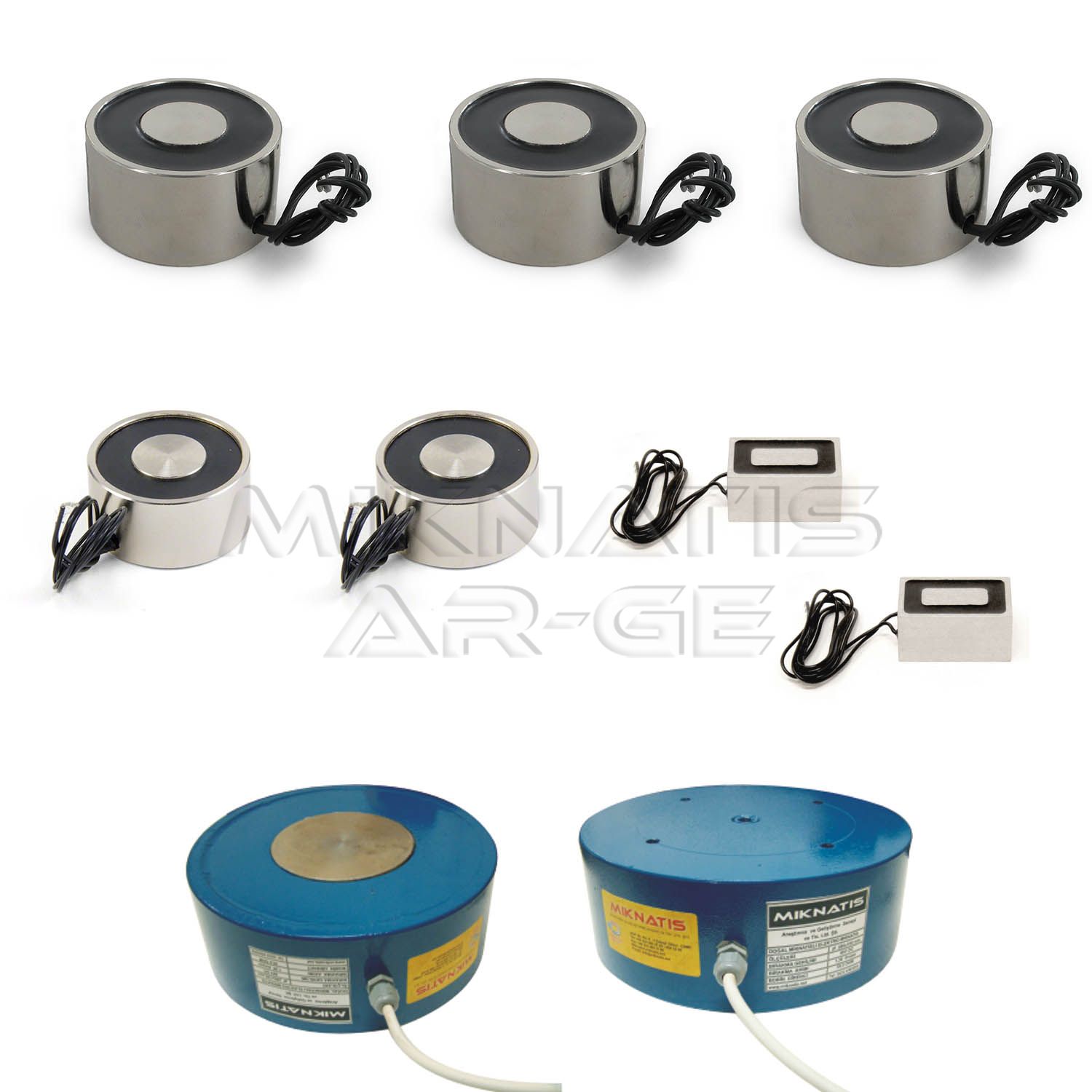
- Size and Form Factor: The physical dimensions and shape are critical for integration into specific systems and machinery. Available in various shapes like circular, rectangular, or U-shaped to suit different mounting and application needs.
- Residual Magnetism: After power is removed, some core materials may retain a small amount of magnetism. Low residual magnetism is often desirable for precise control, ensuring quick release of held objects.
- Operating Temperature Range: The environmental temperature limits within which the electromagnet can function reliably without degradation of performance or material properties.
Diverse Applications Across Industries
The adaptability of electromagnets makes them indispensable across a multitude of sectors, driving innovation and efficiency:
- Industrial Automation: Extensively used in lifting heavy ferrous materials (scrap metal, car bodies) in salvage yards, magnetic separation in recycling plants to sort metals, and clamping mechanisms for precise positioning in manufacturing and assembly processes.
- Medical Technology: Central to Magnetic Resonance Imaging (MRI) machines, which use powerful superconducting electromagnets to generate detailed images of internal body structures. They are also found in some medical devices, drug delivery systems, and research instruments.
- Transportation: Integral to the operation of maglev (magnetic levitation) trains, which use powerful electromagnets to lift and propel trains without physical contact or friction, achieving incredible speeds and energy efficiency.
- Consumer Electronics: Found in loudspeakers (converting electrical signals into sound waves through the interaction of an electromagnet and a permanent magnet), doorbells, and various small motors (e.g., in hard drives, electric razors).
- Security Systems: Used in electromagnetic locks for doors, providing secure and easily controllable access systems in commercial and residential buildings.
- Research and Development: Essential in physics experiments, material science, and particle accelerators to guide and manipulate charged particles, providing critical insights into the fundamental forces of nature.
Choosing and Implementing Electromagnets Effectively
Selecting the correct electromagnet for an application requires careful consideration of its technical specifications relative to the operational demands. Factors such as the required holding force, the available power supply, environmental conditions (temperature, moisture, corrosive agents), and the desired response time (how quickly it can activate/deactivate) are all critical. Proper heat management is also vital, as excessive heat can degrade performance, shorten lifespan, and lead to irreversible damage to the coil insulation.
In conclusion, electromagnets represent a cornerstone of modern engineering, offering unparalleled control over magnetic forces. Their ability to be precisely activated, deactivated, and adjusted makes them superior to permanent magnets for a vast array of dynamic applications. As technology advances, the innovation in electromagnet design and application continues to expand, promising even more sophisticated uses in industrial, medical, and scientific fields, further enhancing their indispensable role in our technologically driven world.
Users also asked these questions
Industrial Electro Magnets are high-performance electromagnetic devices that generate extreme, controllable magnetic fields when an electric (DC) current is applied. Unlike permanent magnets, their magnetic force can be instantly turned ON, turned OFF, or precisely modulated via voltage control, making them essential for automated handling and actuation.
They are critical components in robotic material handling (End-of-Arm Tooling), automated steel stamping/press lines, heavy-duty door locking mechanisms (Access Control), industrial scrap sorting, and precision holding fixtures in CNC machining centers.
Absolute control. Permanent magnets are always "ON" and require physical force to remove a load. Electro Magnets can pick up a heavy steel plate, move it, and instantly drop it with zero physical effort (Power OFF). Furthermore, by adjusting the current (using a PLC), the magnet can be tuned to pick up exactly one steel sheet from a stack instead of two.
Depending on the coil design and core mass, B2B Electro Magnets range from small 10 kg (100 N) gripping units for high-speed pick-and-place robots, up to massive multi-ton capacity blocks used for hoisting structural steel beams and thick plates in shipyards.
Heat generation is managed through engineered Duty Cycles. For 24/7 automation, we design 100% Duty Cycle (Continuous Duty) magnets with high-grade copper windings and thermal potting compounds that dissipate heat, ensuring the magnet does not burn out or lose lifting power during continuous operation.
Yes. Our industrial Electro Magnets are encapsulated in heavy-duty machined steel housings. The internal coils are vacuum-sealed with high-temperature epoxy resin, providing IP65 to IP67 protection against CNC cutting fluids, machine oils, and outdoor weather conditions.
Absolutely. For OEMs, machine builders, and robotics integrators, we custom-engineer Electro Magnets with specific voltage requirements (12V, 24V, 110V, 220V DC), custom holding forces, specific geometries, and specialized mounting threads to seamlessly integrate into your automated systems.