

NdFeB Neodymium Magnets
Shopping Cart
No products in the cart.
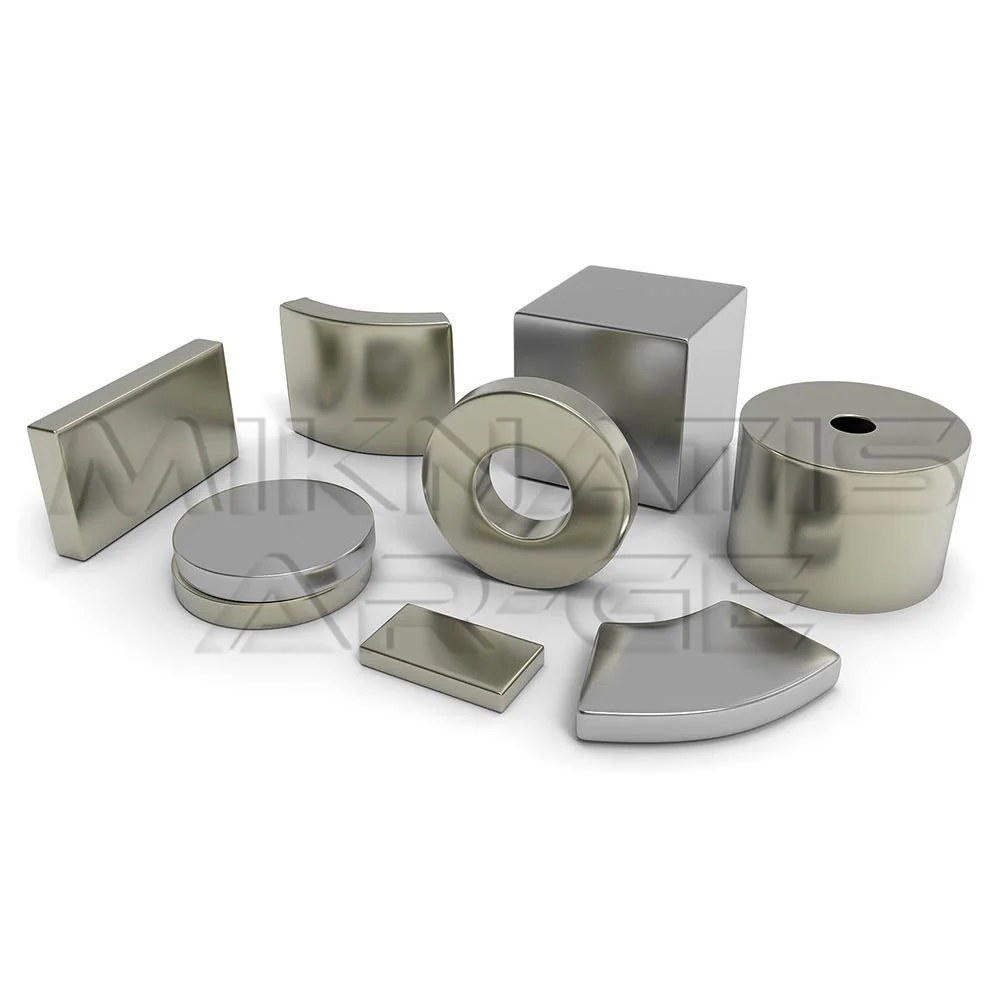
Understanding NdFeB Neodymium Magnets: The Powerhouses of Modern Technology
NdFeB Neodymium magnets, often simply referred to as Neodymium magnets, represent the most powerful type of permanent magnets commercially available. Composed primarily of Neodymium (Nd), Iron (Fe), and Boron (B), these rare-earth magnets have revolutionized countless industries due to their exceptional magnetic strength and versatility. Their development in the early 1980s marked a significant leap in magnetic technology, enabling the miniaturization and enhanced performance of various devices across a broad spectrum of applications.
Composition and Manufacturing Process
Neodymium magnets are intermetallic compounds, typically with a tetragonal crystal structure. The precise stoichiometry is often Nd2Fe14B, which gives them their characteristic magnetic properties. The manufacturing process for these powerful magnets typically involves several key stages:
- Alloying: High-purity Neodymium, Iron, and Boron are melted together in a vacuum induction furnace to form an alloy.
- Jet Milling: The alloy is then rapidly cooled and pulverized into a fine powder. This powder consists of small, magnetically anisotropic particles.
- Pressing: The fine powder is pressed into a desired shape, often in the presence of a strong magnetic field. This aligns the magnetic domains of the particles, which is crucial for maximizing the magnet’s strength.
- Sintering: The compacted “green” magnet is then heated to a high temperature (sintered) just below its melting point in an inert atmosphere or vacuum. This process densifies the material and enhances its magnetic properties significantly.
- Machining and Coating: After sintering, the magnets are typically hard and brittle, requiring diamond tooling for precise shaping and cutting. Due to their susceptibility to oxidation, Neodymium magnets almost always require a protective coating. Common coatings include Nickel-Copper-Nickel (Ni-Cu-Ni), Zinc (Zn), Epoxy, Gold (Au), or Phosphate, which provide corrosion resistance and improve durability.
- Magnetization: The final step involves exposing the magnet to an extremely powerful magnetic field to fully magnetize it.
Key Magnetic Properties and Grades
The performance of NdFeB magnets is characterized by several key magnetic properties:
- Remanence (Br): This is the residual magnetic induction that remains in the magnet after the external magnetizing field is removed. It indicates the strength of the magnetic field produced by the magnet.
- Coercivity (Hcj or Hcb): This measures the magnet’s resistance to demagnetization. A high coercivity means the magnet is less likely to lose its magnetism when exposed to external magnetic fields or elevated temperatures.
- Maximum Energy Product (BHmax): Representing the maximum product of magnetic induction (B) and magnetic field strength (H) on the demagnetization curve, BHmax indicates the maximum energy density stored in the magnet and is a primary indicator of its overall strength. It is typically expressed in MegaGauss-Oersteds (MGOe).
NdFeB magnets are available in various grades, such as N35, N42, N50, N52, etc. The “N” stands for Neodymium, and the number indicates the magnet’s maximum energy product in MGOe. For example, an N52 magnet has a maximum energy product of 52 MGOe, making it significantly stronger than an N35 magnet. Higher grades generally offer stronger magnetic fields but can also be more expensive and have different temperature characteristics. Specialty grades, like those with “M”, “H”, “SH”, “UH”, or “EH” suffixes, indicate higher operating temperatures and coercivity, making them suitable for applications requiring greater thermal stability.
Applications Across Industries
The unparalleled strength of Neodymium magnets has led to their widespread adoption in a vast array of modern technologies:
- Electronics: Used in hard disk drives (HDDs), loudspeakers, headphones, microphones, and mobile phones for their compact size and powerful magnetic fields.
- Automotive: Integral to electric power steering, electric vehicles (EVs) and hybrid vehicles (HEVs) for their motors, ABS sensors, and various other actuators.
- Renewable Energy: Essential components in wind turbine generators, where their high energy product allows for efficient power generation.
- Medical Devices: Utilized in Magnetic Resonance Imaging (MRI) machines, dental equipment, and various surgical tools.
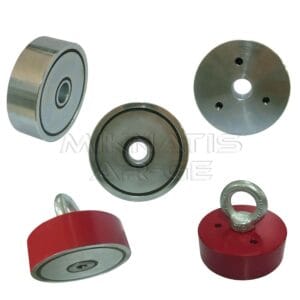
- Industrial and Commercial: Employed in magnetic separators, motors, generators, sensors, magnetic couplings, and numerous holding applications.
- Consumer Products: Found in magnetic toys, jewelry clasps, and various magnetic fasteners.
Advantages and Considerations
Advantages:
- Exceptional Strength: NdFeB magnets offer the highest magnetic strength-to-volume ratio of any commercially available magnet, allowing for smaller and lighter designs.
- High Energy Product: Their impressive BHmax values translate into highly efficient magnetic circuits.
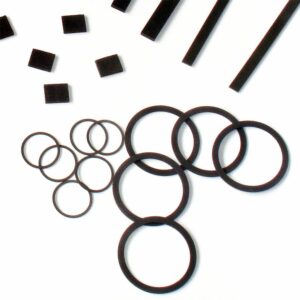
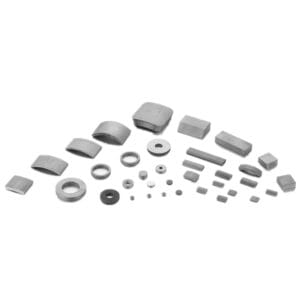
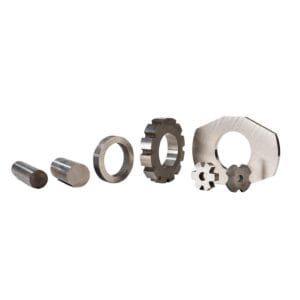
- Versatility: Available in various shapes, sizes, and grades to suit diverse application requirements.
Considerations:
- Brittleness: Neodymium magnets are inherently brittle and can chip or break easily if dropped or allowed to slam into each other.
- Corrosion: Without proper coating, they are susceptible to oxidation and corrosion, which can degrade their magnetic performance over time.
- Temperature Sensitivity: While high-temperature grades exist, standard Neodymium magnets can permanently lose some of their magnetic strength if exposed to temperatures above their maximum operating temperature, typically around 80°C (176°F) for N35 grade.
- Cost: Being rare-earth magnets, their cost can be higher than ferrite or Alnico magnets, influenced by rare-earth material prices.
Conclusion
NdFeB Neodymium magnets stand as a testament to advanced material science, driving innovation across nearly every sector of modern industry. Their unparalleled strength, coupled with continuous advancements in material composition and manufacturing processes, ensures their continued prominence in an ever-evolving technological landscape. As demand for more efficient, compact, and powerful devices grows, Neodymium magnets will undoubtedly remain at the forefront, enabling the next generation of high-performance products and solutions.
Users also asked these questions
NdFeB (Neodymium-Iron-Boron) Magnets are the most powerful permanent magnets commercially available. Belonging to the Rare-Earth family, they offer an extreme magnetic energy product (BHmax), allowing engineers to achieve massive holding force or extreme magnetic separation gradients using incredibly small, lightweight magnet volumes.
They are the critical OEM component in manufacturing high-performance servomotors (for CNC and robotics), electric vehicle (EV) drive motors, wind turbine generators, aerospace sensors, medical MRI machines, and extreme-intensity magnetic separators used in the food and mining industries.
Neodymium is profoundly stronger. A high-grade Neodymium magnet (e.g., N52) can be up to 10 to 15 times stronger than a Ferrite magnet of the exact same size. This extreme power-to-weight ratio allows for the miniaturization of industrial motors and the capture of microscopic iron dust (nano-scale) in filtration systems.
Yes, temperature is their primary limitation. Standard grades (e.g., N35, N52) lose their magnetism permanently if exposed to temperatures above 80°C. However, for severe B2B industrial environments, we engineer High-Coercivity grades (such as EH, UH, or AH grades) that can withstand continuous operating temperatures up to 200°C or 230°C without degrading.
Because they contain a high percentage of Iron, raw Neodymium is highly susceptible to rapid oxidation (rusting) and will physically crumble if left exposed. To prevent this, our industrial B2B magnets are heavily electroplated with protective coatings, most commonly a triple-layer of Nickel-Copper-Nickel (Ni-Cu-Ni), or specialized Zinc, Epoxy, or Teflon coatings for harsh chemical resistance.
Yes, extreme caution is required. Large Neodymium blocks generate massive, invisible pulling forces. If two large blocks are allowed to snap together, they will crush fingers/bones instantly, and the brittle metal will shatter, sending sharp shrapnel into the air. Proper B2B safety protocols, non-magnetic jigs, and PPE are mandatory during assembly.
Absolutely. We are a direct B2B supplier for global OEMs. We manufacture custom Neodymium grades (from N35 to N54, plus high-temp grades), precision-machined into custom geometries (arcs, rings, blocks, countersunk discs) with strict dimensional tolerances and certified flux-density testing for your production lines.
Magnetic Properties
| Remanence | Coercivity | Intrinsic Coercivity | Maximum Energy | Working Temperature | |
| Grade | Br (kG) | HcB (KOe) | Hci (KOe) | BHmax(MGOe) | Tmax |
| N33 | 11.17-11.14 | ≥10.5 | ≥12.0 | 31-33 | 80⁰C |
| N35 | 11.8-12.2 | ≥10.9 | ≥12.0 | 33-36 | 80⁰C |
| N38 | 12.2-12.6 | ≥11.3 | ≥12.0 | 36-39 | 80⁰C |
| N40 | 12.6-12.9 | ≥11.4 | ≥12.0 | 38-41 | 80⁰C |
| N42 | 12.9-13.3 | ≥11.5 | ≥12.0 | 40-43 | 80⁰C |
| N45 | 13.3-13.7 | ≥11.0 | ≥12.0 | 43-46 | 80⁰C |
| N48 | 13.7-14.1 | ≥10.5 | ≥11.0 | 45-49 | 80⁰C |
| N50 | 14.0-14.5 | ≥10.5 | ≥11.0 | 47-51 | 80⁰C |
| N52 | 14.3-14.8 | ≥10.5 | ≥11.0 | 49-53 | 80⁰C |
| N55 | 14.7-15.1 | ≥10.5 | ≥11.0 | 53-56 | 80⁰C |
| N35M | 11.8-12.2 | ≥10.9 | ≥14.0 | 34-36 | 100⁰C |
| N38M | 12.2-12.6 | ≥11.3 | ≥14.0 | 36-39 | 100⁰C |
| N40M | 12.6-12.9 | ≥11.6 | ≥14.0 | 38-41 | 100⁰C |
| N42M | 12.9-13.3 | ≥12.0 | ≥14.0 | 40-43 | 100⁰C |
| N45M | 13.3-13.7 | ≥12.5 | ≥14.0 | 43-46 | 100⁰C |
| N48M | 13.7-14.1 | ≥12.9 | ≥14.0 | 45-49 | 100⁰C |
| N50M | 14.0-14.5 | ≥13.0 | ≥14.0 | 47-51 | 100⁰C |
| N55M | 14.3-14.7 | ≥13.0 | ≥14.0 | 50-53 | 100⁰C |
| N30H | 10.8-11.3 | ≥10.0 | ≥17.0 | 28-31 | 120⁰C |
| N33H | 11.3-11.7 | ≥10.5 | ≥17.0 | 31-34 | 120⁰C |
| N35H | 11.8-12.2 | ≥10.9 | ≥17.0 | 33-36 | 120⁰C |
| N38H | 12.2-12.6 | ≥11.3 | ≥17.0 | 36-39 | 120⁰C |
| N40H | 12.6-12.8 | ≥11.6 | ≥17.0 | 38-41 | 120⁰C |
| N42H | 12.9-13.3 | ≥12.0 | ≥17.0 | 40-43 | 120⁰C |
| N45H | 13.3-13.7 | ≥12.3 | ≥17.0 | 43-46 | 120⁰C |
| N48H | 13.7-14.1 | ≥12.5 | ≥17.0 | 46-49 | 120⁰C |
| N50H | 14.0-14.3 | ≥13.3 | ≥17.0 | 47-50 | 120⁰C |
| N52H | 14.3-14.7 | ≥13.5 | ≥17.0 | 50-53 | 120⁰C |
| N30SH | 10.8-11.3 | ≥10.1 | ≥20.0 | 28-31 | 150⁰C |
| N33SH | 11.3-11.7 | ≥10.6 | ≥20.0 | 31-34 | 150⁰C |
| N35SH | 11.8-12.2 | ≥11.0 | ≥20.0 | 33-36 | 150⁰C |
| N38SH | 12.2-12.6 | ≥11.4 | ≥20.0 | 36-39 | 150⁰C |
| N40SH | 12.6-12.9 | ≥11.6 | ≥20.0 | 38-41 | 150⁰C |
| N42SH | 12.9-13.3 | ≥12.4 | ≥20.0 | 40-43 | 150⁰C |
| N45SH | 13.2-13.7 | ≥12.6 | ≥20.0 | 42-46 | 150⁰C |
| N48SH | 13.6-14.0 | ≥13.0 | ≥20.0 | 46-49 | 150⁰C |
| N50SH | 14.0-14.5 | ≥13.5 | ≥20.0 | 48-51 | 150⁰C |
| N28UH | 10.4-10.8 | ≥9.6 | ≥25.0 | 26-29 | 180⁰C |
| N30UH | 10.8-11.4 | ≥10.1 | ≥25.0 | 28-31 | 180⁰C |
| N33UH | 11.4-11.8 | ≥10.7 | ≥25.0 | 31-34 | 180⁰C |
| N35UH | 11.8-12.2 | ≥10.8 | ≥25.0 | 33-36 | 180⁰C |
| N38UH | 12.2-12.6 | ≥11.3 | ≥25.0 | 36-39 | 180⁰C |
| N40UH | 12.5-12.9 | ≥11.3 | ≥25.0 | 38-41 | 180⁰C |
| N42UH | 12.8-13.3 | ≥11.6 | ≥25.0 | 40-43 | 180⁰C |
| N45UH | 13.2-13.6 | ≥13.0 | ≥25.0 | 43-46 | 180⁰C |
| N28EH | 10.4-10.9 | ≥9.8 | ≥30.0 | 26-29 | 200⁰C |
| N30EH | 10.8-11.4 | ≥10.1 | ≥30.0 | 28-31 | 200⁰C |
| N33EH | 11.4-11.8 | ≥10.3 | ≥30.0 | 31-34 | 200⁰C |
| N35EH | 11.8-12.2 | ≥10.5 | ≥30.0 | 33-36 | 200⁰C |
| N38EH | 12.2-12.6 | ≥11.3 | ≥30.0 | 36-39 | 200⁰C |
| N40EH | 12.6-12.9 | ≥11.6 | ≥30.0 | 38-41 | 200⁰C |
| N28AH | 10.4-10.9 | ≥9.8 | ≥35.0 | 26-29 | 230⁰C |
| N30AH | 10.8-11.3 | ≥10.1 | ≥35.0 | 28-31 | 230⁰C |
| N33AH | 11.3-11.8 | ≥10.3 | ≥33.0 | 31-34 | 230⁰C |
| N35AH | 11.8-12.2 | ≥10.5 | ≥33.0 | 33-36 | 230⁰C |
| N38AH | 12.2-12.6 | ≥11.0 | ≥35.0 | 36-39 | 230⁰C |
Users also asked these questions
NdFeB (Neodymium-Iron-Boron) Magnets are the most powerful permanent magnets commercially available. Belonging to the Rare-Earth family, they offer an extreme magnetic energy product (BHmax), allowing engineers to achieve massive holding force or extreme magnetic separation gradients using incredibly small, lightweight magnet volumes.
They are the critical OEM component in manufacturing high-performance servomotors (for CNC and robotics), electric vehicle (EV) drive motors, wind turbine generators, aerospace sensors, medical MRI machines, and extreme-intensity magnetic separators used in the food and mining industries.
Neodymium is profoundly stronger. A high-grade Neodymium magnet (e.g., N52) can be up to 10 to 15 times stronger than a Ferrite magnet of the exact same size. This extreme power-to-weight ratio allows for the miniaturization of industrial motors and the capture of microscopic iron dust (nano-scale) in filtration systems.
Yes, temperature is their primary limitation. Standard grades (e.g., N35, N52) lose their magnetism permanently if exposed to temperatures above 80°C. However, for severe B2B industrial environments, we engineer High-Coercivity grades (such as EH, UH, or AH grades) that can withstand continuous operating temperatures up to 200°C or 230°C without degrading.
Because they contain a high percentage of Iron, raw Neodymium is highly susceptible to rapid oxidation (rusting) and will physically crumble if left exposed. To prevent this, our industrial B2B magnets are heavily electroplated with protective coatings, most commonly a triple-layer of Nickel-Copper-Nickel (Ni-Cu-Ni), or specialized Zinc, Epoxy, or Teflon coatings for harsh chemical resistance.
Yes, extreme caution is required. Large Neodymium blocks generate massive, invisible pulling forces. If two large blocks are allowed to snap together, they will crush fingers/bones instantly, and the brittle metal will shatter, sending sharp shrapnel into the air. Proper B2B safety protocols, non-magnetic jigs, and PPE are mandatory during assembly.
Absolutely. We are a direct B2B supplier for global OEMs. We manufacture custom Neodymium grades (from N35 to N54, plus high-temp grades), precision-machined into custom geometries (arcs, rings, blocks, countersunk discs) with strict dimensional tolerances and certified flux-density testing for your production lines.
Physical Properties
| Property | Symbol | Unit | Value |
| Density | ρ | g/cc | 7,5 |
| Vickers Hardness | Hv | D.P.N | 570,5 |
| Compressive Strength | C.S | N/mm2 | 780 |
| Coefficient of Thermal Expansion | C// | 10-6/°C | 7,8 |
| Electrical Resistivity, | r | µ Ω.cm | 150 |
| Temperature Coefficient of Resistivity | a | 10-4/°C | 2,8 |
| Electrical Conductivity | s | 106S/m | 0,667 |
| Thermal Conductivity | k | kCal/(m.h.°C) | 7,7 |
| Specific Heat Capacity | c | kCal/(kg.°C) | 0,12 |
| Tensile Strength | σUTS, or SU | kg/mm2 | 8 |
| Young’s Modulus | l / E | 1011N/m2 | 1,5 |
| Flexural Strength | b | 10-12m2/N | 9,8 |
| Compressibility | s | 10-12m2/N | 9,8 |
| Hardness | E.I | N/m2 | 0,64 |
| Poisson’s Ratio | n | 0,24 | |
| Curie Temperature | Tc | °C | 310 |
Users also asked these questions
NdFeB (Neodymium-Iron-Boron) Magnets are the most powerful permanent magnets commercially available. Belonging to the Rare-Earth family, they offer an extreme magnetic energy product (BHmax), allowing engineers to achieve massive holding force or extreme magnetic separation gradients using incredibly small, lightweight magnet volumes.
They are the critical OEM component in manufacturing high-performance servomotors (for CNC and robotics), electric vehicle (EV) drive motors, wind turbine generators, aerospace sensors, medical MRI machines, and extreme-intensity magnetic separators used in the food and mining industries.
Neodymium is profoundly stronger. A high-grade Neodymium magnet (e.g., N52) can be up to 10 to 15 times stronger than a Ferrite magnet of the exact same size. This extreme power-to-weight ratio allows for the miniaturization of industrial motors and the capture of microscopic iron dust (nano-scale) in filtration systems.
Yes, temperature is their primary limitation. Standard grades (e.g., N35, N52) lose their magnetism permanently if exposed to temperatures above 80°C. However, for severe B2B industrial environments, we engineer High-Coercivity grades (such as EH, UH, or AH grades) that can withstand continuous operating temperatures up to 200°C or 230°C without degrading.
Because they contain a high percentage of Iron, raw Neodymium is highly susceptible to rapid oxidation (rusting) and will physically crumble if left exposed. To prevent this, our industrial B2B magnets are heavily electroplated with protective coatings, most commonly a triple-layer of Nickel-Copper-Nickel (Ni-Cu-Ni), or specialized Zinc, Epoxy, or Teflon coatings for harsh chemical resistance.
Yes, extreme caution is required. Large Neodymium blocks generate massive, invisible pulling forces. If two large blocks are allowed to snap together, they will crush fingers/bones instantly, and the brittle metal will shatter, sending sharp shrapnel into the air. Proper B2B safety protocols, non-magnetic jigs, and PPE are mandatory during assembly.
Absolutely. We are a direct B2B supplier for global OEMs. We manufacture custom Neodymium grades (from N35 to N54, plus high-temp grades), precision-machined into custom geometries (arcs, rings, blocks, countersunk discs) with strict dimensional tolerances and certified flux-density testing for your production lines.