

Ferrite Magnets
Shopping Cart
No products in the cart.
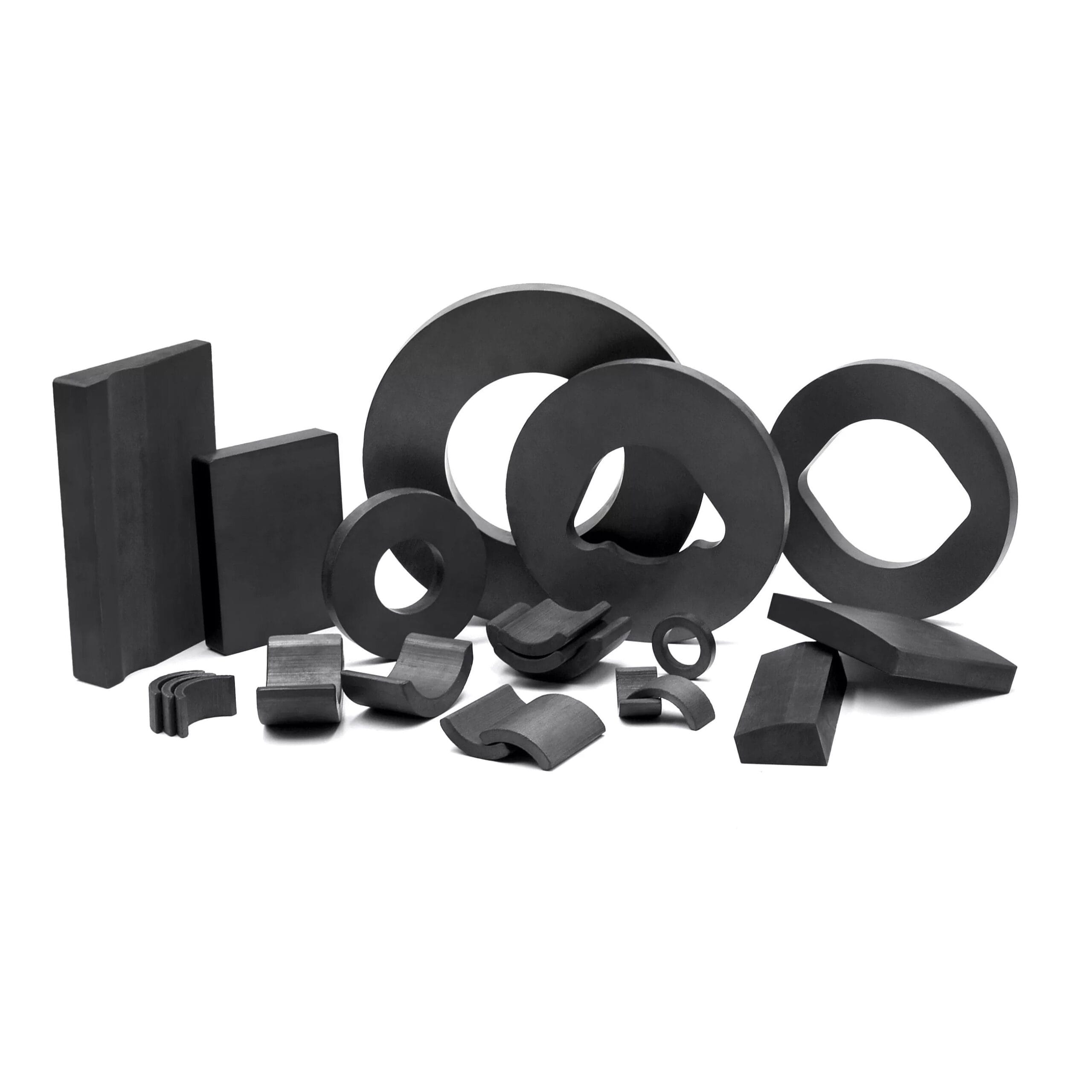
Ferrite Magnets
Ferrite magnets, commonly known as ceramic magnets, represent a cornerstone in the world of magnetic materials due to their exceptional balance of cost-effectiveness and reliable performance. These magnets offer a compelling combination of properties that make them indispensable across a vast array of industrial and consumer applications.
Understanding Ferrite Magnets
Composition and Manufacturing Process
Ferrite magnets are primarily composed of iron oxide (Fe2O3) combined with either strontium carbonate (SrCO3) or barium carbonate (BaCO3). This unique composition is processed using advanced powder metallurgy techniques. The raw materials are first mixed and then milled into a fine powder. This powder is subsequently pressed into a specific shape within a die, either in the presence or absence of a magnetic field (for anisotropic vs. isotropic magnets, respectively). Finally, the pressed material is sintered at high temperatures, transforming it into a hard, brittle, ceramic-like magnet. This manufacturing process contributes significantly to their cost-effectiveness.
Key Magnetic Characteristics
While recognized for having weaker magnetic strength compared to rare-earth magnets like Neodymium, ferrite magnets possess a relatively high intrinsic coercivity (Hci). This characteristic makes them exceptionally resistant to demagnetization from external magnetic fields, ensuring long-term stability in their applications. Their residual induction (Br) is moderate, providing sufficient magnetic flux for a wide range of uses, particularly where space constraints are not the primary concern. The maximum energy product (BHmax) of ferrite magnets, while lower than rare-earth types, is perfectly adequate for their intended applications, balancing performance with affordability.
Temperature Performance
One of the most significant advantages of ferrite magnets is their exceptional temperature stability. They are highly efficient and maintain their magnetic properties reliably up to +250 °C, and in some specialized grades, even higher. This makes them an ideal choice for high-temperature environments, particularly within electrical machines where consistent performance is critical. However, it is crucial to understand their behavior at sub-zero temperatures. For instance, at temperatures between -10 to -20°C, ferrite magnets may exhibit a measurable reduction in pulling force. This attenuation is a function of the magnet’s specific shape, grade, and the application’s unique requirements, primarily due to their negative temperature coefficient of remanence. Designers must account for this characteristic in applications exposed to extreme cold.
Durability and Corrosion Resistance
The inherent chemical composition of ferrite magnets grants them excellent resistance to oxidation, rust, and most solvents. This eliminates the need for protective coatings, such as nickel plating or epoxy, which are often required by other magnet types (e.g., Neodymium) to prevent corrosion. This natural resistance significantly reduces overall system cost and complexity, enhancing their suitability for harsh environments. Furthermore, their high intrinsic coercivity ensures robust resistance to external demagnetizing fields, contributing to their long operational lifespan.
Mechanical Properties
Despite their robustness in terms of chemical and demagnetization resistance, ferrite magnets are mechanically brittle. Being a ceramic material, they can chip, crack, or break if subjected to impact, excessive mechanical stress, or improper handling. This characteristic necessitates careful design and assembly considerations to prevent damage during installation and operation.
Why Choose Ferrite Magnets?
Ferrite magnets stand out in the magnet industry for several compelling reasons, making them a preferred choice for a vast majority of applications worldwide.
Cost-Effectiveness
As one of the most cost-effective magnetic materials available, ferrite magnets provide an excellent performance-to-price ratio. Their abundant raw materials and relatively straightforward manufacturing process contribute to their economic viability, making magnetic solutions accessible for a broad spectrum of products.
Outstanding Resistance
Their exceptional resistance to demagnetization and corrosion is a hallmark feature. This intrinsic durability allows them to perform reliably in challenging environments without degradation, unlike many other magnet types that require protective measures.
Versatile Applications
Ferrite Magnet represents over 75 percent of world magnet consumption (by weight). This remarkable consumption figure underscores their unparalleled value proposition in terms of performance versus cost. They are the first choice for most DC motors, magnetic separators, magnetic resonance imaging (MRI) equipment, and automotive sensors. Their utility extends to loudspeakers, magnetic latches, children’s toys, and various craft applications, showcasing their incredible versatility across industries.
Advantages;
- Ferrite magnets are cost effective.
- It has good temperature performance.
- It is corrosion resistant.
- It is resistant to demagnetization.
Limitations of Ferrite Magnets
While offering numerous benefits, it is important to acknowledge the inherent limitations of ferrite magnets to ensure proper application selection.
Lower Magnetic Strength
Compared to rare-earth magnets, ferrite magnets possess a weaker magnetic field strength. This means that for applications requiring very high magnetic force in a compact space, alternatives like Neodymium magnets might be more suitable. However, for many common industrial and consumer uses, their strength is entirely sufficient.
Brittleness
As ceramic materials, ferrite magnets are inherently fragile. They can easily break or chip if dropped or subjected to strong impacts, requiring careful handling during manufacturing, assembly, and end-use to prevent damage.
Disadvantages;
- Ferrite magnets have weak magnetic strength.
- It breaks and cracks easily.
Applications of Ferrite Magnets
The widespread adoption of ferrite magnets is a testament to their versatility and practical utility across numerous sectors. Their balance of magnetic properties, durability, and cost-effectiveness makes them ideal for:
- Electric Motors and Generators: Dominant in DC motors, stepper motors, and small generators due to their stable performance at varying temperatures and cost efficiency.
- Loudspeakers and Audio Systems: Essential components in traditional speakers, headphones, and microphones for converting electrical signals into sound.
- Magnetic Separators: Used extensively in recycling, mining, and food processing industries to separate ferrous materials from non-ferrous ones.
- Automotive Industry: Found in various sensors, actuators, and small motors within vehicles, from window motors to ABS sensors.
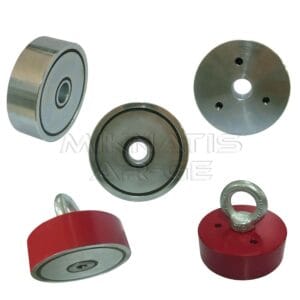
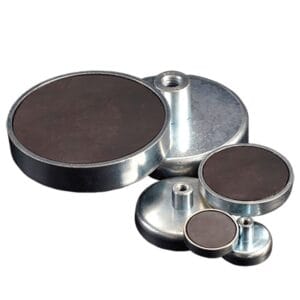
- Holding Devices: Common in magnetic latches, cabinet closures, and tool holders.
- Crafts and Hobbies: Widely used in educational kits, refrigerator magnets, and DIY projects due to their safety and ease of use.
We offer you the widest variety of Ceramic-Ferrite magnets, ensuring you find the perfect solution for your specific application needs, backed by technical expertise and quality assurance.
Users also asked these questions
Industrial Ferrite Magnets (Ceramic Magnets) are highly cost-effective, sintered permanent magnets made from strontium or barium iron oxides. They are the backbone of bulk industrial applications, providing deep-penetrating magnetic fields, extreme temperature resistance (up to 250°C), and absolute immunity to corrosion.
They are consumed in massive quantities (OEM) for the production of electric DC motors, automotive wiper/starter motors, large industrial loudspeakers, magnetic conveyor pulleys, and heavy-duty overband (cross-belt) magnetic separators used in mining and recycling.
While Neodymium is significantly stronger at the surface, Ferrite provides a much deeper magnetic field penetration. In heavy mining, a massive block of Anisotropic Ferrite can project its magnetic field deep into a thick pile of coal on a conveyor belt to pull out heavy tramp iron. Additionally, Ferrite costs a fraction of Neodymium and never rusts.
Yes, they are structurally composed of iron oxide (a ceramic material), which means they are already oxidized. Therefore, they are 100% immune to rust and corrosion. They can operate continuously submerged in water, acidic mining slurries, or exposed to outdoor rain without any protective coating.
They offer excellent thermal stability. Standard Neodymium loses power at 80°C, but Ferrite magnets can operate continuously at temperatures up to 250°C without permanent demagnetization, making them ideal for hot foundries, motor stators, and oven-curing lines.
Because they are manufactured via a ceramic sintering process, Ferrite magnets are very hard but brittle. They should not be subjected to heavy mechanical impacts, hammer blows, or allowed to snap together forcefully, as they will chip or crack. In B2B assemblies, they are usually protected within a steel housing or potted in epoxy.
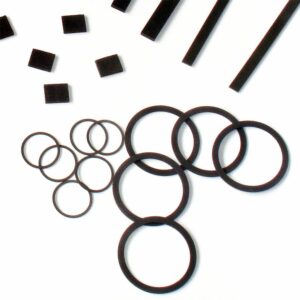
Absolutely. For OEMs and motor manufacturers, we provide wholesale B2B supply of Anisotropic (oriented) and Isotropic Ferrite in custom shapes (arcs for motors, blocks, rings, discs) with strict dimensional tolerances, flux density testing, and reliable global supply chain logistics.
Magnetic Properties
| Grade | Remanence Br (kG) | Coercive Force Hcb (kOe) | Intrinsic Coercive Force Hcj (kOe) | Max. Energy Product (BH)max (MGOe) |
|---|---|---|---|---|
| Y8T | 2.0-2.35 | 1.57-2.01 | 2.64-3.52 | 0.8-1.2 |
| Y10T | 2.0-2.35 | 1.61-2.01 | 2.64-3.52 | 0.8-1.2 |
| Y20 | 3.2-3.8 | 1.70-2.39 | 1.76-2.45 | 2.3-2.8 |
| Y22H | 3.1-3.6 | 2.76-3.14 | 3.52-4.02 | 2.5-3.0 |
| Y23 | 3.2-3.7 | 2.14-2.39 | 2.39-2.89 | 2.5-3.2 |
| Y25 | 3.6-4.0 | 1.70-2.14 | 1.76-2.51 | 2.8-3.5 |
| Y26H | 3.6-3.9 | 2.76-3.14 | 2.83-3.20 | 2.9-3.5 |
| Y26H-1 | 3.6-3.9 | 2.51-3.14 | 2.83-3.20 | 2.9-3.5 |
| Y26H-2 | 3.6-3.8 | 3.30-3.62 | 4.00-4.40 | 3.0-3.5 |
| Y27H | 3.7-4.0 | 2.58-3.14 | 2.64-3.20 | 3.1-3.6 |
| Y28 | 3.7-4.0 | 2.20-2.64 | 2.26-2.76 | 3.3-3.8 |
| Y28H-1 | 3.8-4.0 | 3.02-3.27 | 3.14-3.52 | 3.4-3.8 |
| Y28H-2 | 3.3-3.8 | 3.41-3.71 | 4.80-5.09 | 3.3-3.8 |
| Y30 | 3.7-4.0 | 2.20-2.64 | 2.26-2.76 | 3.3-3.8 |
| Y30BH | 3.8-3.9 | 2.80-2.95 | 2.90-3.08 | 3.4-3.8 |
| Y32 | 4.0-4.2 | 1.90-2.39 | 1.95-2.45 | 3.8-4.0 |
| Y33 | 4.0-4.3 | 2.39-2.76 | 2.45-2.83 | 4.0-4.2 |
| Y35 | 4.1-4.4 | 2.58-3.14 | 2.64-3.20 | 4.2-4.5 |
Users also asked these questions
Industrial Ferrite Magnets (Ceramic Magnets) are highly cost-effective, sintered permanent magnets made from strontium or barium iron oxides. They are the backbone of bulk industrial applications, providing deep-penetrating magnetic fields, extreme temperature resistance (up to 250°C), and absolute immunity to corrosion.
They are consumed in massive quantities (OEM) for the production of electric DC motors, automotive wiper/starter motors, large industrial loudspeakers, magnetic conveyor pulleys, and heavy-duty overband (cross-belt) magnetic separators used in mining and recycling.
While Neodymium is significantly stronger at the surface, Ferrite provides a much deeper magnetic field penetration. In heavy mining, a massive block of Anisotropic Ferrite can project its magnetic field deep into a thick pile of coal on a conveyor belt to pull out heavy tramp iron. Additionally, Ferrite costs a fraction of Neodymium and never rusts.
Yes, they are structurally composed of iron oxide (a ceramic material), which means they are already oxidized. Therefore, they are 100% immune to rust and corrosion. They can operate continuously submerged in water, acidic mining slurries, or exposed to outdoor rain without any protective coating.
They offer excellent thermal stability. Standard Neodymium loses power at 80°C, but Ferrite magnets can operate continuously at temperatures up to 250°C without permanent demagnetization, making them ideal for hot foundries, motor stators, and oven-curing lines.
Because they are manufactured via a ceramic sintering process, Ferrite magnets are very hard but brittle. They should not be subjected to heavy mechanical impacts, hammer blows, or allowed to snap together forcefully, as they will chip or crack. In B2B assemblies, they are usually protected within a steel housing or potted in epoxy.
Absolutely. For OEMs and motor manufacturers, we provide wholesale B2B supply of Anisotropic (oriented) and Isotropic Ferrite in custom shapes (arcs for motors, blocks, rings, discs) with strict dimensional tolerances, flux density testing, and reliable global supply chain logistics.
Physical Properties
| Property | Symbol | Unit | Value |
|---|---|---|---|
| Density | D | g/cc | 4.9 – 5.1 |
| Vickers Hardness | Hv | D.P.N | 400 – 700 |
| Compressive Strength | C.S. | N/mm2 | 680 – 720 |
| Coefficient of Thermal Expansion | C// | 10-6/C | 15 |
| Electrical Resistivity | R | micro ohm.cm | 1 x 10e10 |
| Thermal Conductivity | k | W/cm.C | 0.029 |
| Tensile Strength | sigma_UTS | Pa | 34 x 10e6 |
| Young Modulus | E | Pa | 1.8 x 10e11 |
| Flexural Strength | sigma | Pa | 62 x 10e6 |
| Compressibility | C.S. | Pa | 895 x 10e6 |
| Hardness | H | Mohs | 7 |
| Poisson Ratio | v | – | 0.28 |
| Curie Temperature | Tc | C | 450 |
Users also asked these questions
Industrial Ferrite Magnets (Ceramic Magnets) are highly cost-effective, sintered permanent magnets made from strontium or barium iron oxides. They are the backbone of bulk industrial applications, providing deep-penetrating magnetic fields, extreme temperature resistance (up to 250°C), and absolute immunity to corrosion.
They are consumed in massive quantities (OEM) for the production of electric DC motors, automotive wiper/starter motors, large industrial loudspeakers, magnetic conveyor pulleys, and heavy-duty overband (cross-belt) magnetic separators used in mining and recycling.
While Neodymium is significantly stronger at the surface, Ferrite provides a much deeper magnetic field penetration. In heavy mining, a massive block of Anisotropic Ferrite can project its magnetic field deep into a thick pile of coal on a conveyor belt to pull out heavy tramp iron. Additionally, Ferrite costs a fraction of Neodymium and never rusts.
Yes, they are structurally composed of iron oxide (a ceramic material), which means they are already oxidized. Therefore, they are 100% immune to rust and corrosion. They can operate continuously submerged in water, acidic mining slurries, or exposed to outdoor rain without any protective coating.
They offer excellent thermal stability. Standard Neodymium loses power at 80°C, but Ferrite magnets can operate continuously at temperatures up to 250°C without permanent demagnetization, making them ideal for hot foundries, motor stators, and oven-curing lines.
Because they are manufactured via a ceramic sintering process, Ferrite magnets are very hard but brittle. They should not be subjected to heavy mechanical impacts, hammer blows, or allowed to snap together forcefully, as they will chip or crack. In B2B assemblies, they are usually protected within a steel housing or potted in epoxy.
Absolutely. For OEMs and motor manufacturers, we provide wholesale B2B supply of Anisotropic (oriented) and Isotropic Ferrite in custom shapes (arcs for motors, blocks, rings, discs) with strict dimensional tolerances, flux density testing, and reliable global supply chain logistics.