

Eddy Current Separators
Shopping Cart
No products in the cart.
Eddy Current Separators
Understanding Eddy Currents and Their Application
An Eddy Current is a circular electric current that occurs in conductors when the magnetic field changes due to the law of induction. This phenomenon is governed by Faraday’s Law of Induction, which states that a changing magnetic field through a conductor induces an electromotive force (EMF), leading to the flow of current. These eddy currents flow in a closed loop within the conductor, in planes perpendicular to the magnetic field. The strength of these currents is influenced by several factors, including the electrical conductivity of the material, the frequency of the changing magnetic field, and the strength of the magnetic field itself.
Central to eddy current separation are diamagnetic materials. These are substances such as Copper, Aluminium, Bismuth, Diamond, Silver, Lead, and Silicon, which can be magnetized by any magnet in the opposite direction to the magnetic field lines while in the magnetic field of that magnet. Unlike ferromagnetic or paramagnetic materials, diamagnetic substances create an induced magnetic field that repels the external magnetic field, a principle crucial for their separation.
The Science Behind Eddy Current Separation
The Principle of Eddy Current Separation
Eddy current separation is an effective and widely used method for separating non-ferrous diamagnetic metals from non-metallic wastes. The core mechanism involves a high-speed rotating Magnetic Drum, which consists of high-power permanent magnets. As this drum rotates, it creates a rapidly changing magnetic field. When metals such as copper and aluminium, which are diamagnetic and conductive, pass through this changing magnetic field, strong eddy currents are induced within them.
According to Lenz’s Law, these induced eddy currents generate their own magnetic field, which opposes the original changing magnetic field. This interaction results in a powerful repulsive force acting on the non-ferrous metal particles. Simultaneously, with the effect of centrifugal force from the conveyor belt, the non-metallic material falls freely into a collection chute. In contrast, the non-magnetic metal, propelled by the strong repulsive force, is thrown to a longer trajectory, allowing for its precise separation from the non-metallic stream. This innovative process provides a highly efficient means of recovering valuable non-ferrous metals from complex waste streams.
Several critical factors significantly influence the efficiency and accuracy of separation:
- Belt speed: Optimizing the conveyor belt speed is crucial for presenting materials to the magnetic rotor effectively and ensuring proper trajectory separation.
- Size, volume, and weight of metal: The physical properties of the metal particles directly affect the magnitude of induced eddy currents and the resulting repulsive force. Heavier or larger particles may require different rotor speeds or splitter settings.
- Magnetic sensitivity: The strength and configuration of the permanent magnets within the rotor dictate the intensity of the changing magnetic field and thus the strength of the induced eddy currents.
- Blade setting: The adjustable splitter blade positioning is vital for precisely dividing the trajectory of the non-metallic and separated non-ferrous materials.
Components and Operational Design
An Eddy Current Separator is engineered for robust performance and consists of several key components:
- A robust belt conveyor system that transports the mixed material stream.
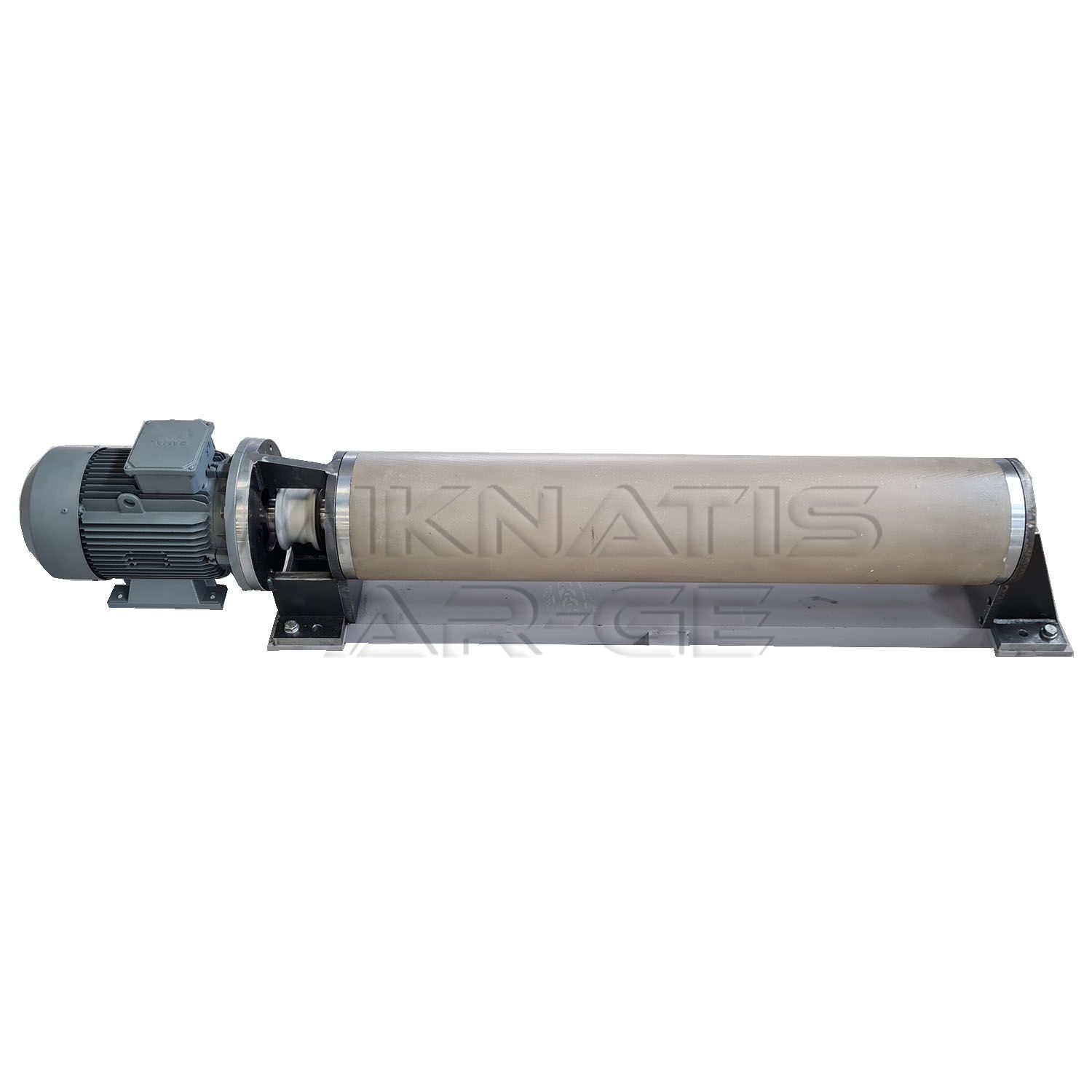
- A non-ferrous rotating external drum shell, typically made of non-metallic composite material, which rotates at a conventional belt conveyor speed.
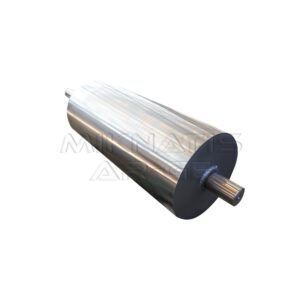
- An independent, high-speed rotating permanent magnetic rotor housed inside the empty external drum. This rotor, manufactured from powerful Neodymium Magnets, features alternating poles and rotates at a much higher RPM than the outer shell, generating the necessary rapidly changing magnetic field.
- A robust drive system that powers both the conveyor belt and the magnetic rotor, ensuring synchronized and reliable operation.
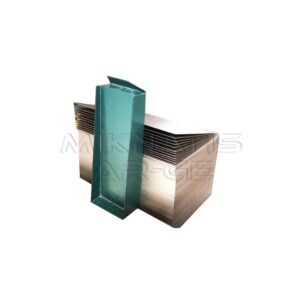
- A fully adjustable splitter blade positioned at the discharge point to separate the non-ferrous metals from the non-metallic stream.
A crucial operational consideration is the presence of ferromagnetic materials. Ferromagnetic materials holding on to the magnetic drum surface get hot due to induced eddy currents and hysteresis losses, which may cause damage or abrasion of the conveyor tape or the magnets themselves. For this reason, it is strongly recommended to separate the product from ferrous metals with magnetic separators (e.g., overhead magnets or magnetic drums) before feeding the product to the Eddy Current Separator. This pre-separation step not only protects the equipment but also significantly enhances the efficiency and purity of the non-ferrous metal separation.
Advanced Features and Performance
Tailored Separation Capabilities
Our Eddy Current Separators are designed to handle a wide range of materials and provide precise separation capabilities. They can effectively separate aluminium parts with a minimum size of 30x30x0.5 mm and above, and copper parts of 20x11x2 mm and above. These specific capabilities make our separators ideal for various applications, including electronic waste recycling (e-waste), automotive shredder residue (ASR) processing, plastics recycling, glass recycling, and even wood recycling, where small non-ferrous metal contaminants need to be removed to improve the purity of the end product or protect downstream machinery.
Our Commitment to Excellence
We take pride in the quality and performance of our equipment. Eddy Current Separator Magnetic Drums are produced locally in our Mıknatıs R&D İzmir factory. This local manufacturing ensures stringent quality control, rapid response to customer needs, and the ability to customize solutions. Our dedicated R&D team continuously innovates to deliver cutting-edge separation technology, ensuring high efficiency, durability, and optimal return on investment for our clients.
Partner with Us for Optimal Separation Solutions
Investing in an Eddy Current Separator is a strategic decision for any operation dealing with mixed material streams and seeking to recover valuable non-ferrous metals. Our advanced separators offer unparalleled efficiency, reliability, and precision, contributing significantly to sustainability goals and profitability. You can contact our technical team for your needs and requests. We are ready to provide expert consultation, tailored solutions, and comprehensive support to meet your specific separation challenges.
Users also asked these questions
Industrial Eddy Current Separators (ECS) are advanced, high-speed kinetic machines used in recycling and mining to continuously eject non-ferrous metals (like aluminum, copper, and brass) from non-metallic bulk materials (like plastics, glass, or wood) using extreme, rapidly alternating magnetic fields.
They are the backbone of the recycling industry, mandatory in MRF (Material Recovery Facilities), ASR (Automotive Shredder Residue) processing, PET plastic bottle recycling, e-waste (WEEE) recovery, and bottom-ash processing from incinerators, converting waste into highly profitable non-ferrous metals.
The machine features a massive, ultra-high-speed internal magnetic rotor (spinning up to 3,000+ RPM) inside a non-metallic head pulley. As the rotor spins, it induces "eddy currents" inside passing conductive metals (like an aluminum can). This creates an opposing magnetic field, aggressively launching the aluminum forward (into a collection bin) while plastic/glass falls straight down.
To repel heavy copper wire or microscopic aluminum flakes, the rotor must be packed with the most extreme grades of Rare-Earth Neodymium (NdFeB). We engineer B2B rotors with high-frequency alternating poles (e.g., 22, 24, or 32 poles) to create a violent magnetic gradient, ensuring over 95% separation purity.
Absolutely. The outer shell of the rotor (which the conveyor belt rides on) is manufactured from highly durable, impact-resistant composite materials (Carbon Fiber or Epoxy-Glass/Kevlar). The heavy-duty conveyor belts are tear-resistant, ensuring continuous operation under severe industrial punishment.
No, and in fact, large iron pieces must be removed before reaching the ECS. If heavy iron enters the ECS, it will violently lock onto the high-speed rotor, causing catastrophic damage to the Kevlar shell. Therefore, ECS units are always installed downstream of a heavy-duty Overband Magnetic Separator or Magnetic Drum.
Yes. We engineer complete, turnkey B2B Eddy Current systems tailored to your required throughput (e.g., 5 to 50 Tons/Hour). Our custom solutions include integrated vibratory feeders, specialized splitter boxes, control panels (PLC/Inverters for rotor speed adjustment), and specific belt widths (up to 2000mm) to maximize your plant's ROI.